
Porcelain Tiles Benefits Uses and Buying Guide
A floor can look beautiful on day one and still fail in everyday life. Spilled tea, wet bathroom corners, dragged furniture, dusty balconies, pet paws, and heavy foot traffic can all expose the wrong tile choice. That is where porcelain tiles earn their reputation.
Porcelain is a type of ceramic tile made from refined clay and fired at high temperatures. The result is a dense, hard tile with very low water absorption. In practical terms, it handles moisture, stains, scratches, and daily wear better than many regular ceramic options.
This guide explains the benefits, best uses, finishes, sizes, buying checks, and installation points that matter before choosing porcelain for a home, shop, restaurant, or outdoor area.

Why porcelain tiles are so popular
Porcelain tiles suit Indian homes because they balance design and durability. They can look like marble, stone, cement, terrazzo, wood, or plain colour, but they do not need the same level of sealing and care as many natural materials.
They also work across budgets and room types. A polished marble-look tile can make a formal living room feel premium. A matte stone-look tile can make a bathroom safer and easier to maintain. A textured tile can handle a balcony or terrace better than a smooth indoor finish.
The biggest appeal is this mix:
Strong surface performance
Porcelain resists everyday scratches and wear better than softer flooring materials.
Low water absorption
Its dense body makes it suitable for wet areas when installed correctly.
Wide design range
Digital printing allows realistic stone, wood, concrete, and patterned looks.
Easy cleaning
Most dirt comes off with sweeping, mopping, and a mild cleaner.
Long service life
Good quality porcelain can last for many years with proper installation.
Porcelain is not perfect. It can be heavier than standard ceramic tiles, harder to cut, and less forgiving if the base floor is uneven. But for many spaces, its strengths outweigh these drawbacks.
Porcelain tiles and ceramic tiles are not the same
Porcelain and ceramic tiles belong to the same broad family, but they behave differently.
Feature | Porcelain tile | Regular ceramic tile |
Density | Denser and harder | Less dense |
Water absorption | Very low | Usually higher |
Best use | Floors, bathrooms, outdoor areas, heavy-use spaces | Walls, light-use floors, dry areas |
Cutting | Needs better tools and skill | Easier to cut |
Price | Often higher | Often more affordable |
Durability | Better for long-term wear | Good for lighter applications |
Regular ceramic tiles still have a place, especially on walls, kitchen backsplashes, and low-traffic areas. They are easier to install and often cost less.
Porcelain is the better pick when the floor will face water, heavy movement, frequent cleaning, or outdoor exposure. It is also a good choice when the design calls for large tiles with a refined finish.
Key benefits of porcelain tiles
They handle moisture well
Porcelain’s low porosity makes it a smart choice for bathrooms, kitchens, utility areas, and balconies. Water does not easily soak into the tile body, which helps reduce staining and surface damage.
That said, the tile is only one part of a wet-area system. The base, waterproofing, slope, grout, and drainage also matter. Even the best tile will not help if water pools around a drain or seeps through poorly filled joints.
They resist stains and daily spills
Tea, coffee, turmeric, cooking oil, and muddy footprints are part of everyday life in many homes. Glazed porcelain tiles are generally easy to wipe clean because spills stay mostly on the surface.
For kitchens, dining areas, and entryways, choose a finish that does not show every water mark or footprint. A soft matte, satin, or lightly textured surface is often easier to live with than a mirror-polished one.
They offer many design choices
Porcelain can copy the look of natural materials with impressive detail. Popular options include:
Marble-look tiles for living rooms and bedrooms
Wood-look planks for warm, natural interiors
Stone-look tiles for bathrooms and balconies
Cement-look tiles for minimalist spaces
Terrazzo-look tiles for a playful, modern feel
Plain neutral tiles for clean, timeless flooring
Large-format tiles are especially popular because they reduce grout lines. Fewer visible joints can make a room look bigger and cleaner.
They suit high-traffic areas
Porcelain is a strong option for corridors, shops, cafés, clinics, stair landings, and common areas. It can take regular movement without losing its surface character quickly.
For commercial or semi-commercial use, do not choose by looks alone. Check the tile’s wear rating, slip resistance, thickness, and finish. A glossy tile that looks stunning in a showroom can become difficult to maintain in a busy entrance.
They are low-maintenance
Porcelain does not need polishing, waxing, or regular sealing in the way some natural stones do. Daily care is simple:
Sweep or vacuum dust and grit.
Mop with clean water and a mild floor cleaner.
Wipe spills quickly, especially oily or coloured spills.
Avoid harsh acids and abrasive powders.
Clean grout lines from time to time.
The grout normally needs more attention than the tile. Good grout selection and neat installation can make maintenance much easier.

Best uses for porcelain tiles around a property
Living rooms and bedrooms
Porcelain works well in living rooms because it can create a clean, continuous floor. In warmer parts of India, it also feels cooler underfoot than wood or carpet.
For living rooms, large tiles in 600 mm x 1200 mm, 800 mm x 800 mm, or similar formats can reduce visual breaks. Beige, greige, ivory, soft grey, and stone-look finishes are safer long-term choices than very loud designs.
For bedrooms, avoid overly glossy floors if you want a softer, calmer look. Matte marble-look or wood-look porcelain can add warmth without heavy upkeep.
Kitchens and dining areas
The kitchen floor needs to handle dropped utensils, cooking spills, oil splashes, and frequent mopping. Porcelain is a practical choice because it resists stains and cleans easily.
Choose a tile with enough grip. A very smooth polished floor can become slippery near the sink or cooking area. Mid-tone colours also hide crumbs and marks better than pure white or dark black.
Bathrooms
Bathrooms need slip resistance, correct slope, and easy cleaning. Porcelain is widely used for both bathroom floors and walls.
For floors, pick matte, anti-skid, or textured tiles. Smaller tiles also provide more grout lines, which can improve grip. For walls, larger glossy or satin tiles are fine because slip is not a concern.
Use light colours if the bathroom is small or lacks natural light. Dark tiles can look luxurious, but they may show soap marks and hard-water stains more clearly.
Balconies, terraces, and outdoor areas
Outdoor areas need tiles that can handle sunlight, rain, dust, and temperature changes. Porcelain can perform well outdoors, but the finish must be suitable.
Look for outdoor-rated, textured, anti-skid tiles. Avoid highly polished surfaces in balconies, steps, ramps, and terraces. Also check that the installer creates proper slope so water drains away.
For terraces, the waterproofing layer below the tile is critical. Tiles protect the surface, but they are not a substitute for proper waterproofing.
Staircases and entrances
Stairs need grip and visibility. A tile with a textured finish or an anti-skid surface is safer than a glossy finish. Use nosing profiles, grooved edges, or contrasting strips where needed.
Entrances collect sand and dust. Choose a tougher surface that can hide minor dirt between cleanings. A good doormat outside and inside the door will also protect the tile finish.
Types and finishes to know before buying
Porcelain tiles come in several forms. The names can vary between brands, but these categories are common.
Glazed porcelain tiles
These tiles have a printed or coloured surface layer protected by glaze. They offer the widest design range, including marble, wood, cement, and patterned looks.
They are suitable for most home interiors. For floors, check the wear resistance and make sure the finish matches the room’s use.
Full-body porcelain tiles
In full-body tiles, the colour or material runs through the tile body. Chips are less noticeable because the inside is closer to the surface colour.
These are useful in heavy-traffic commercial areas, corridors, and spaces where long-term wear matters more than decorative variety.
Polished porcelain tiles
Polished tiles have a shiny, reflective finish. They can look elegant in living rooms, hotel-style lobbies, and formal spaces.
The drawback is slipperiness and maintenance. Polished surfaces may show footprints, water marks, and fine scratches more easily. Use them carefully in homes with elderly family members, children, or pets.
Matte porcelain tiles
Matte tiles have a softer, non-reflective surface. They are easier to maintain visually and often feel more natural underfoot.
They suit bedrooms, kitchens, bathrooms, balconies, and modern interiors. For many homes, matte or satin finishes are the most practical daily choice.
Textured and anti-skid tiles
These tiles have raised or rough surfaces for better grip. They are best for bathrooms, outdoor areas, ramps, terraces, and wet utility zones.
The trade-off is cleaning. Heavily textured tiles can trap dust and soap residue, so choose the texture level based on the actual risk of slipping.

How to choose the right porcelain tile
Match the tile to the room
Start with the space, not the catalogue. A tile should fit the way the room is used.
Space | Best porcelain choice | What to avoid |
Living room | Large matte, satin, or polished tile | Very slippery finishes if the floor is often wet |
Kitchen | Stain-resistant matte or satin tile | Pure white grout and glossy slippery floors |
Bathroom floor | Anti-skid or textured tile | Polished tile |
Bathroom wall | Glossy, satin, or decorative tile | Rough textures that collect soap residue |
Balcony | Outdoor-rated textured tile | Smooth indoor tile |
Staircase | Grip-friendly tile with edge treatment | Shiny tile without nosing |
Shop or café | High-wear porcelain | Delicate decorative surfaces |
Check slip resistance
Slip resistance is one of the most important buying checks. For wet areas, ask the seller for tiles suitable for bathrooms, balconies, ramps, or outdoor floors.
Do not judge grip by hand touch alone. Walk on a sample if possible. A tile that feels slightly textured in the hand may still become slippery when wet.
Look at tile thickness and strength
Most floor tiles are made thick enough for normal residential use, but heavy-use areas may need stronger options. For outdoor areas, parking edges, and commercial floors, ask for tiles made for that load.
Wall tiles do not need the same strength as floor tiles. Do not use a wall-only tile on the floor just because the design looks good.
Choose the right size
Large tiles create a seamless look, but they need a flatter base and skilled installation. If the floor has many slopes, corners, or cuts, a mid-size tile may be easier to install cleanly.
Common choices include:
300 mm x 300 mm for small bathrooms and utility areas
600 mm x 600 mm for general flooring
600 mm x 1200 mm for modern living rooms and bedrooms
Plank sizes for wood-look designs
Large slabs for premium wall cladding and feature areas
Bigger is not always better. In a small bathroom with multiple slopes, a smaller tile can help form the correct fall towards the drain.
Review colour in real light
Showroom lighting can change how a tile looks. Take samples home if possible and see them in morning, afternoon, and evening light.
Light tiles make rooms feel bigger, but they may show dark dirt. Very dark tiles look dramatic, but they can show dust, water spots, and scratches. Mid-tone tiles are often the easiest to maintain.
Buy extra tiles from the same batch
Tiles can vary slightly between batches. Buy enough material at one time, including wastage.
As a general habit, keep extra tiles for future repairs. If one tile cracks years later, finding the same shade and size may be difficult.
Installation matters as much as tile quality
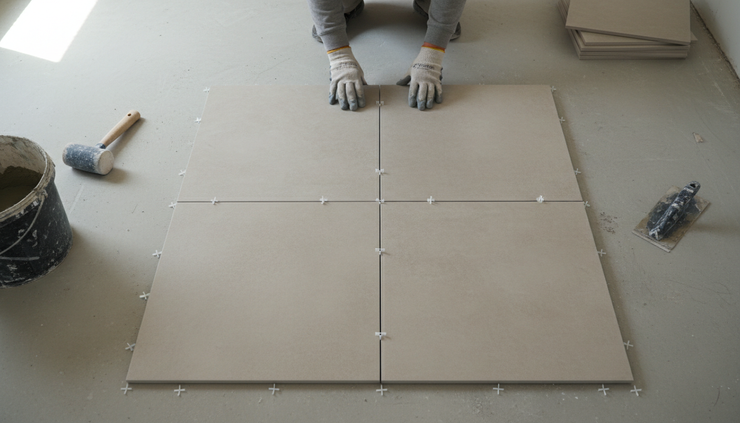
A premium tile can fail if installed badly. Uneven floors, hollow spots, wrong adhesive, poor spacing, and careless grouting can lead to cracks, lippage, stains, and loose tiles.
Prepare the base properly
The floor should be clean, level, stable, and cured before installation. Large-format porcelain tiles need an especially flat surface. If the base has dips or humps, the finished floor may show uneven edges.
Use the right adhesive
Porcelain is dense, so it needs a suitable tile adhesive rather than a weak cement slurry method in many applications. The correct adhesive depends on tile size, indoor or outdoor use, and the base surface.
Large tiles often need back-buttering, where adhesive is applied to both the floor and the back of the tile. This improves contact and reduces hollow spots.
Keep even joints
Very narrow joints may look neat, but they leave less room for movement and minor size variation. Use spacers and follow the tile maker’s guidance.
Rectified tiles have machine-cut edges, so they can be laid with tighter joints than non-rectified tiles. Even then, some joint width is needed.
Choose grout carefully
Grout colour changes the final look. Matching grout creates a seamless floor. Contrasting grout highlights the tile pattern.
For bathrooms, kitchens, and balconies, use a grout suitable for wet conditions. Epoxy grout costs more than regular cement grout, but it resists stains and water better. It can be a good choice in shower areas and kitchen backsplashes.
Common buying mistakes to avoid
Many tile problems start before installation. Avoid these common mistakes:
Choosing only by showroom appearance
A glossy tile under display lights may not suit a wet bathroom or busy kitchen.
Ignoring slip resistance
Grip matters more than shine in bathrooms, balconies, stairs, and entryways.
Buying too little material
Extra cutting, breakage, and future repair needs are normal. Order with wastage.
Mixing batches
Shade variation can be visible once the tiles are laid across a large floor.
Using the wrong grout colour
White grout on a busy kitchen floor can stain and demand frequent cleaning.
Skipping surface checks
Warped, chipped, or uneven tiles should be noticed before installation begins.
Hiring unskilled labour for large tiles
Large-format porcelain needs proper tools, levelling clips, and careful handling.
How to maintain porcelain tiles
Porcelain is easy to care for, but the right routine keeps it looking better for longer.
Sweep daily or every few days, especially near entrances. Dust and sand act like abrasives when walked over. Mop with a mild cleaner and clean water. Rinse if the cleaner leaves residue.
Avoid strong acids unless the tile or grout maker says they are safe. Acidic cleaners can damage grout and some tile finishes. Do not use metal scrubbers on polished or glazed surfaces.
For outdoor textured tiles, use a brush to remove dust from the surface pattern. For hard-water marks in bathrooms, clean regularly rather than waiting for thick deposits to form.
A simple rule works well: protect the surface, clean spills early, and look after the grout.
Final thoughts on choosing porcelain tiles
The best tile is not the most expensive or the most dramatic. It is the tile that fits the room, handles the daily use, and still looks good after years of cleaning, movement, and weather.
Choose polished porcelain for dry, formal spaces where shine matters. Choose matte porcelain for easy living. Choose textured or anti-skid porcelain for wet and outdoor areas. Check batch, finish, size, slip resistance, adhesive, and grout before placing the order.
Porcelain tiles are a strong, stylish, and practical choice when selected with care. Treat the buying process as a mix of design and performance, and the floor will reward that decision every single day.

Comments